
Mental Health NLP Analysis
Mental Health Natural Language Processing
One in five people in the United States experiences mental illness. Recently, more individuals have openly discussed the affects of mental illness on their lives. Many organizations now collect public posts about mental health conditions. Sentiment Analysis for Mental Healthis a public database containing social media posts from users self-identifying with a particular condition or have none at all. This database aggregates 8 Kaggle datasets related to these conditions from Reddit, Twitter, and other sources. To gather one specific condition, they looked at subreddit thread titles or annotations done by humans with diagnostic mental health experience.
Each entry contains a unique ID, post, and the writer’s condition. Categories include prominent conditions—Depression, Suicidal, Anxiety, Stress, Bipolar, and Personality Disorder—as well as a control category, Normal.
Steps for cleaning and processing the dataframe
(Refer to eda.ipynb)
| Action | Remaining Rows (starts at 53,043) |
|---|---|
| Dropped duplicates and missing texts (using Pandas dataframe manipulation) | 51,073 |
| Removed non-English posts (using Lingua) | 50,138 |
| Cleaning the text and removing any texts where nothing remains (lower casing, removing URLs, hashtags, etc), removing stop words, and lemmatizing the words using SpaCy and NLTK | 50,056 |
The final breakdown of conditions in the 50,056 rows: 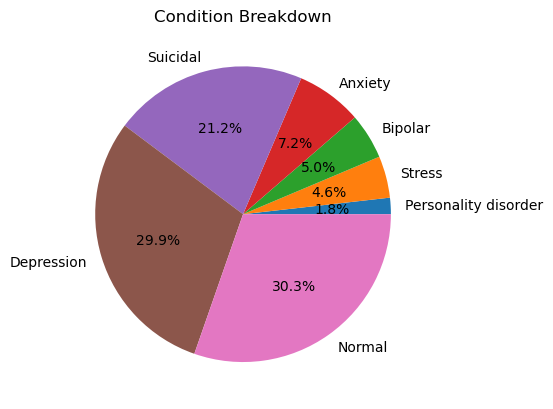 Figure 0
Word Associations
1.1 Introduction
The research question explores whether linguistic patterns are distinctive to specific classes. Specifically, are certain emotions, concerns, or concepts prevalent among individuals with mental health conditions? While each condition’s distinctiveness is intriguing, it may also offer practical advantages. For example, the dataset I used examines training chatbots to help doctors treat patients. If chatbots can detect emotions and identify condition-specific keywords, then customized treatment may become more achievable. (Refer to viz.ipynb)
1.2 Methodology
After following the preprocessing steps above, two methods were used:
- A TF-IDF vectorizer transformed the text and identified terms that were frequent in a specific document but not across others. The goal was to highlight words associated with a given condition, which could help train chatbots to identify it.
- A WordCloud visualized the most common words with more than three letters that appeared in more than five posts. Weights and frequencies were based on each word’s average frequency compared with its mean across all documents. Condition-specific words (e.g., bipolar, depression) and the Normal category were removed from the dataframe before analysis.
1.3 Data Results
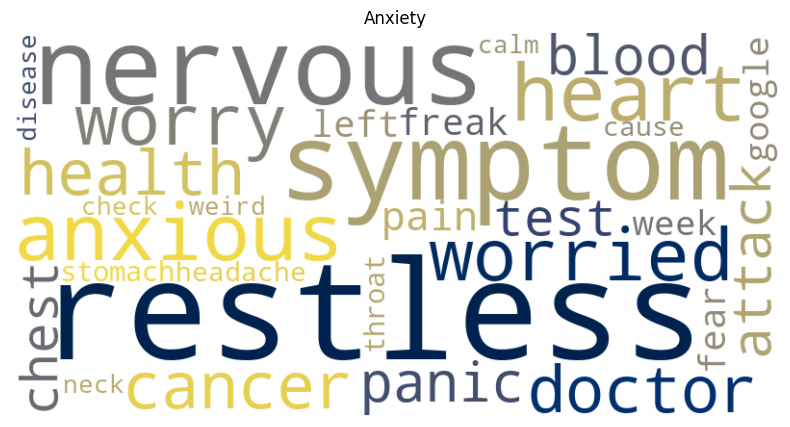
Figure 1.1 Anxiety Wordcloud
The Anxiety WordCloud includes words commonly associated with anxiety, such as ‘worry’, ‘nervous’, and ‘restless’. Additionally, many words align with medical themes. Terms such as ‘heart’, ‘doctor’, and ‘cancer’ appear prominently, suggesting that medical concerns are frequently mentioned by individuals with anxiety in this dataset.
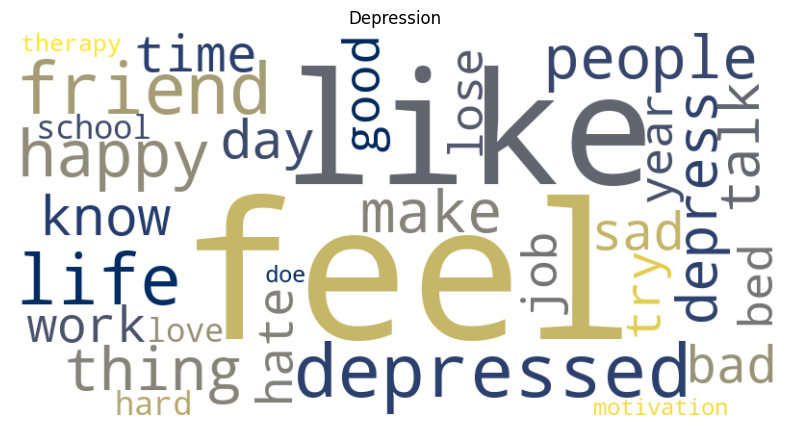
Figure 1.2 Depression WordCloud
People with depression focus on their emotions, using words like ‘feel’, ‘depress’, ‘hate’, ‘happy’, and ‘good’. This suggests they discuss emotions more than other classes do; specifically, they more frequently describe feeling x, y, z, rather than being x, y, z.
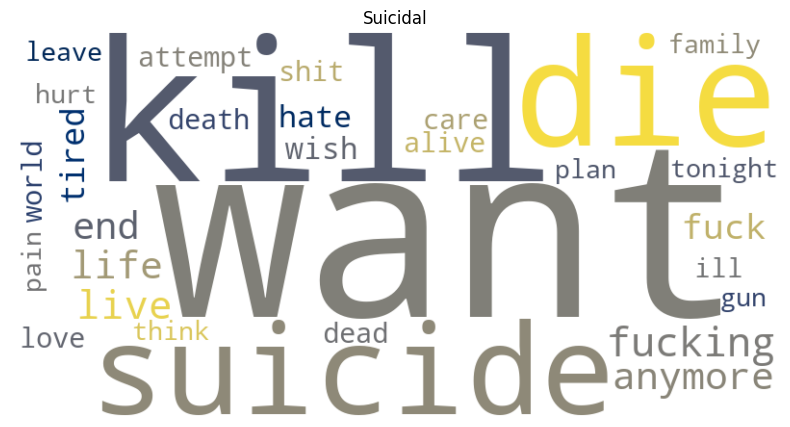
Figure 1.3 Suicide WordCloud
When someone is suicidal, they often discuss life and death, as well as aspirations they believe are unattainable. Common keywords in these posts include ‘kill,’ ‘die,’ ‘end,’ and some expletives.
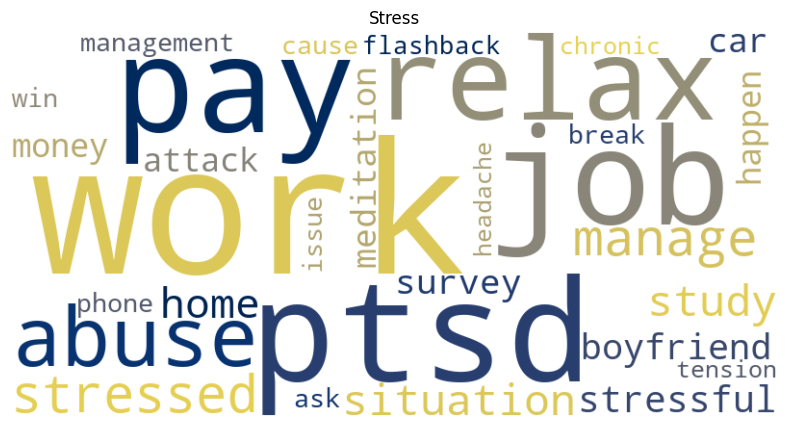
Figure 1.4 Stress WordCloud
The stress word cloud features many situational words, with ‘work,’ ‘job,’ ‘study,’ ‘pay,’ and ‘home’ appearing frequently. These routine subjects are common triggers for people experiencing stress. While stress and anxiety are related, anxiety words concern the body and life-or-death issues, and stress words relate to uncontrollable situations. ‘PTSD’ and ‘flashback’ are mentioned, which is interesting; most likely because PTSD doesn’t correlate as much with other conditions, it was labeled as stress by data collectors.
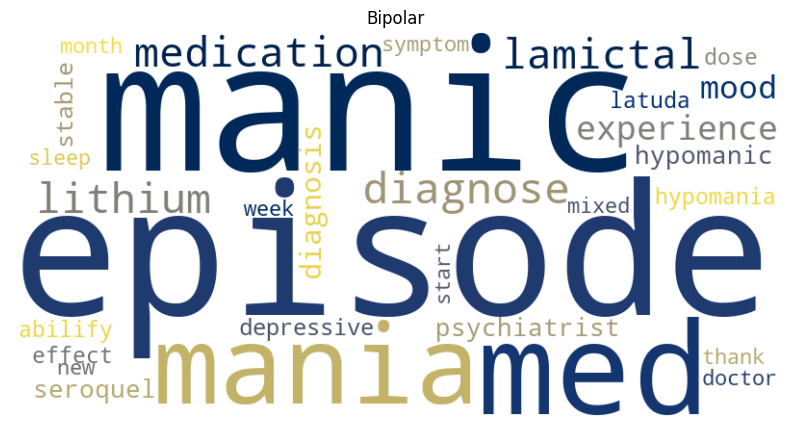
Figure 1.5 Bipolar WordCloud
Bipolar disorder involves manic and depressive episodes. Words like ‘mania,’ ‘episodes,’ and ‘depressive’ are prominent. Many words focus on treatment rather than feelings. Terms like ‘diagnose’, ‘diagnosis’, ‘psychiatrist’, ‘med’, ‘medicine’, and ‘doctor’ appear. Medicines that treat bipolar disorder, such as ‘Lithium,’ ‘Lamictal,’ ‘Seroquel,’ and ‘Latuda,’ are discussed.
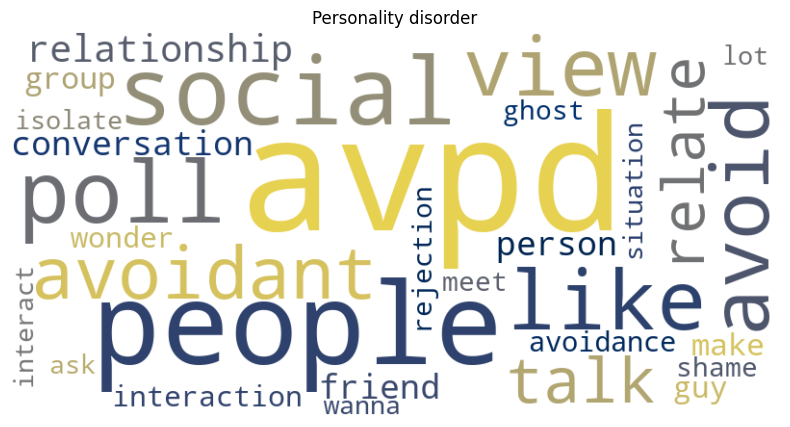
Figure 1.6 Personality Disorder WordCloud
Personality disorders are defined by a person exhibiting unnatural patterns and unhealthy thinking that differ from societal norms. One of the most common and well-known personality disorders is Avoidant Personality Disorder (AvPD). Descriptions of AvPD are also represented in the WordCloud, with sufferers discussing struggles ‘socially’ and with understanding relationships and ‘people.’
1.4 Conclusion
The results provided key insights into what distinguishes each mental health condition. Because TF-IDF scores are heavily dictated by word frequency, the features that uniquely define the majority class appear far more often in the text. This was the case with Depression , as further testing revealed words like ‘feel’ and ‘like’ are among the most common across all conditions. That is a flaw in using TF-IDF with labels. To summarize:
Anxietywas linked with health concerns.Depressionfocused on strong emotions.Suicidalemphasized life-and-death language.Stresscentered on life circumstances such as jobs and finances.Bipolar DisorderandPersonality Disorderhighlighted condition-related terminology, withBipolarfocusing more on treatment andPersonality Disorderfocusing more on social and life struggles.
Domain Specific Transformer Predictions
2.1 Introduction
My next research question addresses a model’s capacity to predict an author’s condition from a post. While there is literature concerning model training for depression detection, fewer studies compare multiple mental health conditions.
A model that can recognize linguistic patterns unique to conditions could:
- Help social workers find individuals in need of early intervention.
- Serve as an educational resource to help researchers better understand the experiences, challenges, and thought processes of individuals with a specific condition.
- Support chatbots in responding to users more effectively and providing resources.
In my opinion, it could be used as aid in diagnosis. Another reason not to use this model for diagnosis is that people can have multiple conditions, and this model was not designed to handle multiple ranked outputs.
The primary focus of this project was to compare the performance of a broader transformer model to a pre-trained model for mental health.
2.2 Methodology
The Normal category was removed because it was the majority class, and the goal was to identify which condition each post belonged to. In practice and for use cases like identifying those in general with mental health conditions for prevention and risk management, a model trained on identifying the presence of any condition would be more efficient.
Posts were cleaned by:
- Removing links, hashtags, and punctuation
- Converting text to lowercase
- Avoiding lemmatization for model training
Two transformer models were evaluated:
- DistilBERT
- MentalRoBERTa (a transformer trained on mental health posts)
Based on documentation on the MentalRoBERTa Hugging Face page, the model’s training was closely aligned with the development of an automatic mental health detector. MentalRoBERTa is for non-clinical uses and was trained on publicly available, anonymized posts, not on social media posts, and does not collect user profiles.
I performed automatic tokenization and padded statements using the tokenizer specific to each model. To address class imbalance, I applied weighted training to balance class losses across classes. Training was accordingly weighted to compensate for class imbalance.
Shared Model Parameters
- Training epochs: 10
- Batch size: 24
- Early stopping patience: 2
- Learning rate: 2e-5
- Weight decay: 0.01
- Evaluation, saving, and logging strategy: epoch
- Best model loaded at the end based on Macro F1-score
2.3 Results
2.3.1 MentalRoBERTa
(Refer to Mental_model.ipynb)
The results of running MentalRoBERTa were promising. Specifically, the model stopped early around epoch 9. The final training loss was 0.26, and the observed accuracy was 78%.
Therefore, emphasis was placed on the macro F1-score to account for class imbalance. Macro F1 considers both precision and recall, ensuring equal representation for all classes, including minority classes such as Personality disorder. There was no need to penalize the model for failing to fit one class.
The highest macro F1-score achieved was 0.8213, within the 0.80-0.90 range, suggesting the model performs well.
This result is consistent with the macro F1-score calculated from the classification report following predictions.
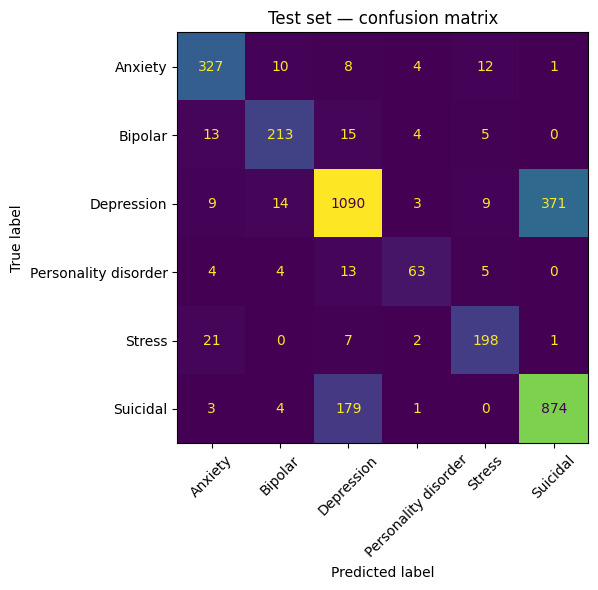
Figure 2.2 Confusion Matrix for MentalRoBERTa
The confusion matrix supported several initial hypotheses. Depression and Suicidal posts were the most frequently confused categories, while Stress was occasionally mislabeled as Anxiety. Personality Disorder, being a minority class, also produced lower F1-scores and was more difficult to evaluate accurately.
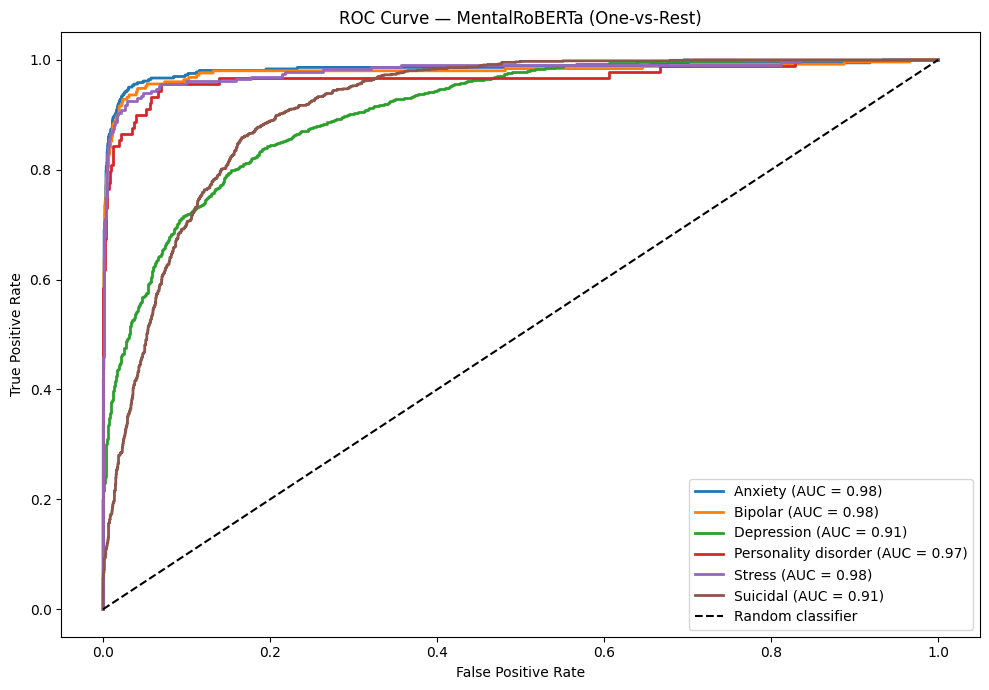
Figure 2.3 ROC curves for MentalRoBERTa
The ROC curves indicate that the results are relatively good, with the curves for Anxiety, Bipolar, Personality Disorder, and Stress close to 1 (AUC of .97-.99). This suggests that the model generally performs well at differentiating between the classes. However, Suicidal and Depression both have an AUC of .91, which is expected because those two conditions overlap.
2.3.2 DistilBERT
(Refer to distil.ipynb)
DistilBERT served as my base model to compare with a mental health-specific pre-trained model.
Using identical parameters and data, I reran the model with DistilBERT as both the tokenizer and the pre-trained model. The results were comparable, with most metrics trailing the mental health pre-trained model by 1-5 points. The average Macro-F1 was 80%, which is at the lower end of what is considered very good for such models. The model struggles to accurately recognize and evaluate minority classes.
2.4 Conclusion
MentalRoBERTa outperformed DistilBERT across most evaluation metrics.
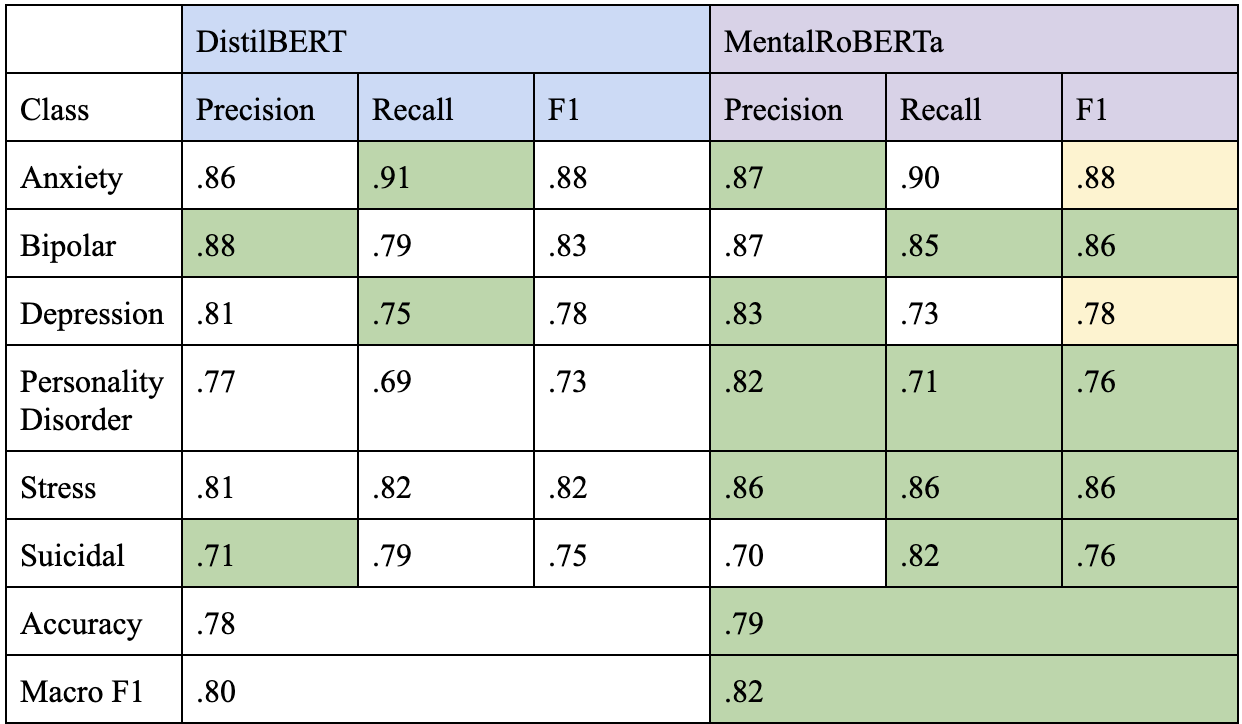
Table 2.6 Comparison of DistilBERT and MentalRoBERTa - the cells marked in green are the highest scores between the two models.
Key Takeaways
- The high recall on
Bipolardisorder suggests the model trained on MentalRoBERTa produced fewer false negatives, which is important as missing a diagnosis can be critical. DistilBERT seems to identify only obvious Bipolar-related text. - MentalRoBERTa performed better on all metrics for the data’s minority classes:
Personality Disorder(1.8% of the data) andStress(4.6% of the data). This proves that its domain-specific training helps it identify more specific/minor patterns more accurately without missing users. - While DistilBERT has slightly higher precision than MentalRoBERTa in the
Suicidalcategory, MentalRoBERTa is better at recognizing nuanced references to suicide. The latter model raises a few more false alarms (lower precision), but it catches more people in crisis (higher recall). This is critical for intervention. - There was no difference in performance between the F1 in
DepressionandAnxiety, and similar performance on other metrics.DepressionandAnxietyare the most prevalent conditions, not just in this dataset, but in general, which means related language would be covered significantly by DistilBERT’s training data.
The findings support the hypothesis that a domain-specific pre-trained transformer performs better than a broader general-purpose model for mental health classification tasks.